Though it has almost become cliche to say, it is still the case that small charities are the backbone of civil society. Across the UK and internationally, they deliver vital services, build communities, and tackle some of the most complex challenges facing people today, often with limited resources and lean teams. During Small Charity Week, we want to shine a light on the organisations and individuals doing this work every day.
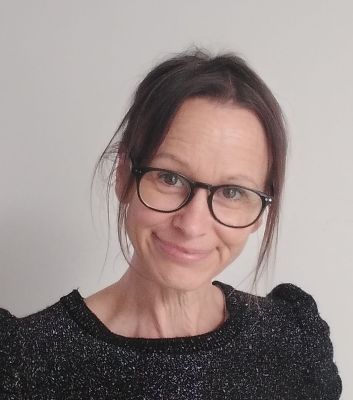
This year, we spoke to Sarah Bamber, CFO of GanzAfrica CIO, a charity working to train young professionals to attain impactful careers by addressing Africa’s agri-food systems challenges and improving livelihoods for wider communities. with a particular focus on food systems and agricultural development. With programmes in Rwanda and Burkina Faso, GanzAfrica CIO mobilises resources whilst affiliate organisation, GanzAfrica Foundation in Rwanda implements programmes. Sarah leads the finance function across both organisations, as part of a management team of four.
Her perspective offers a candid and instructive window into the realities of running a small, internationally-focused charity in its early stages of growth.
Can you tell us a bit about GanzAfrica CIO and the work you do there?
GanzAfrica CIO was established as a resource mobilisation vehicle for our affiliate organisation in Rwanda. Our programme partner, GanzAfrica Foundation, supports young professionals with technical and professional skills development and work placements, where they innovate digital solutions and champion data-based decision-making for institutional partners. We see young people as the key innovators in bringing meaningful change to food systems across Africa. We currently have programmes in Rwanda and Burkina Faso, and we work with government ministries and institutional partners to help them achieve their goals and better serve the people they represent, particularly across agriculture, land, and environment. My role is CFO of both organisations.

What drew you to become a CFG member, and what have you found most useful about your membership?
As soon as we registered as a CIO in the UK, I knew we would need access to information, networking, and the kinds of tools that CFG offers. Joining CFG was actually one of the first things we did. The events and trainings have been consistently useful, whether in introducing us to issues we need to understand or providing guidance on things we were actively grappling with. As a small and new organisation our needs are very specific, but being part of CFG has hugely accelerated our broader understanding of the sector.
What do you enjoy most about your role?
For me, life has to be lived with impact, and I can contribute to significant impact at GanzAfrica. My role is very much back office, covering operations and supporting our fellows through their training, growth and deployment to institutional partners. Our work is deeply interconnected. We talk about food systems, but health, education, and business development all feed into that. We train our fellows to think with a broad, systemic vision, and I find that approach energising.
What have been some of your recent highlights and successes?
Personally, it has been the accelerated learning across governance, finance, and compliance, faciliatated through CFG opportunities. Getting on top of what good practice looks like and how to implement it practically has been a real focus. As an organisation, one of our biggest achievements over the past year has been opening a bank account. That was a challenge and a real milestone. Anecdotal evidence in the sector had prepared us - UK financial institutions are often cautious about organisations operating in the contexts we do, so navigating that process was a significant piece of work.
How has the financial picture looked over the past year or so?
Every day brings a challenge for any charity, and particularly for smaller ones. We have had real successes, including securing our second grant into the CIO, which is fantastic. But there is always a tension between what you can see needs to be done and what the funding allows. There is funding available in our space, but accessing it is a considerable undertaking, especially when everything is being done for the first time. We’re still developing a track record, which will give future donors the confidence to partner with us, and we’re doing so in an increasingly complex regulatory environment.
How have you been navigating those challenges?
Our primary model is the partnership between the UK CIO and our Rwanda-based affiliate. That relationship has been the cornerstone of everything so far. In terms of wider collaboration, we are at an early stage, but we know that finding the right partners is not straightforward. It is a bit like dating: you have a sense of what will work for you and what your non-negotiables are, and that narrows down the options considerably. We’re all about co-creation, in the context of partnerships with a genuine alignment of mission and approach.

How do you approach risk management as a smaller organisation?
Starting from a blank page we are approaching risk holistically from the outset. We look at each area of our work and ask: what are the risks, what are the mitigants, and what is our risk threshold? We know that the frameworks we are building now are the ones we will be referring back to in a year, two years, five years. In that sense, every decision we make at this stage is setting a precedent, which focuses the mind.
What are your main aims for the next 12 months?
Resource mobilisation is front and centre. That is why the UK CIO exists. So we need to make strong progress in connecting with potential donor partners and converting those relationships into sustainable funding streams. That will then drive decisions about how we develop our infrastructure in the UK. Over the next year we will develop a much clearer picture of what skills we need, what we can sensibly outsource, and what keeps us nimble.
What are your biggest concerns for the sector, and what gives you cause for optimism?
My main concern is keeping pace with regulatory change. It is a bit like steering a large ship: by the time you have implemented a change, the environment has shifted again. My hope is that regulation can serve the sector rather than the sector having to serve regulation. Employment law is a good example: changes that benefit employees are genuinely positive, but they need to be implementable without consuming disproportionate amounts of charity time or funding. What I would love to see is a regulatory environment that is enabling rather than prohibitive, and that supports charities of all sizes to do what they do well.
Do you have any advice for other CFG members, and smaller charities in particular?
Join CFG and get embedded in the conversations. Of course, if a charity is motivated enough to become a member, they will already be engaging with all the resources and opportunities available, but I would really emphasise that peer learning and being part of those discussions is where a lot of the value lies. As a very new and small charity, some of the conversations we encounter are a step ahead of where we currently are, but it all builds your sectoral knowledge, awareness and your ability to navigate challenges.

What smaller charities can learn from GanzAfrica CIO
Sarah's reflections offer a grounded and honest account of what it means to run a small, internationally-focused charity in its formative years. Several themes stand out as having wider relevance for smaller organisations at any stage of development.
Her approach to risk management, building frameworks from scratch with an awareness that today's decisions become tomorrow's precedents, is a model that any growing charity could usefully adopt. Sarah’s candid remarks about the challenges of banking, compliance, and finding the right partners speaks to experiences that are far from unique. Her framing of partnership as something to approach carefully and selectively, rather than for its own sake, is an interesting counter to the idea that collaboration in all cases is always positive.
Perhaps most valuable is her advice to other smaller charities: get embedded in the conversation. For GanzAfrica CIO, CFG membership has been a means of accelerating sectoral knowledge and building a foundation of good practice from day one. That is a lesson worth taking seriously, whatever the size or age of your organisation.