For small charities stretched thin across fundraising, operations, finance and more, Gift Aid can sometimes feel like an afterthought. But for the Multiple System Atrophy (MSA) Trust – the UK’s leading charity supporting people with MSA, a rare and rapidly progressive neurological condition – it's a well-managed income stream which makes up just under 6% of their total fundraised income.

“Any additional Gift Aid income gained provides vital unrestricted funding,” says Nikki Webster, Director of Operations and Research at the Trust. “It’s therefore really important to maximise every opportunity.”
That 6% is a meaningful sum for a charity funded entirely by voluntary donations, and MSA Trust relies on this fundraising to keep all of its core services free. The Trust provides specialist information and support services to people affected by MSA from diagnosis onwards, through a team of MSA health care specialists, social welfare specialists and support staff, alongside funding research and training healthcare professionals in the condition.
For Nikki, the focus on making every pound count takes on a deeper meaning. She joined MSA Trust in 2024 following the loss of her father to multiple system atrophy. She has over 20 years of experience as a physiotherapist in the NHS; managing complex services and leading teams through fiscally demanding environments. That personal connection, she says, gives even greater meaning to her work and “a strong sense of responsibility to ensure the Trust’s activities are focused on making a genuine difference.”
What makes MSA Trust’s approach a useful case study is that they are achieving excellent results without significant budgets or resources. The Trust’s entire fundraising team is made up of three people, with Gift Aid administration being the responsibility of just one of them. They handle everything from collecting and securely storing declarations to preparing and submitting claims to HMRC and reconciling payments received.
Making things easier for donors (and themselves)
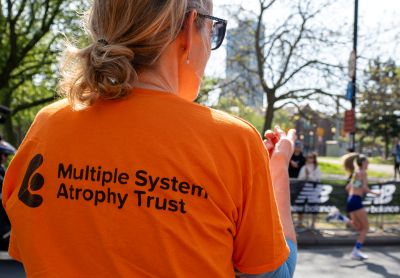
Much of MSA Trust’s work has focused on removing friction for supporters. The charity introduced a Typeform-based Gift Aid declaration process on its website, making it quick for supporters to submit or update their details online. They also keep Gift Aid visible across different activities including regular messaging in fundraising newsletters, features in the supporter magazine and other targeted activity on social media, including around Gift Aid Awareness Day in October.
And the Trust have also been using the SwiftAid Gift Aid Finder tool to surface previously unclaimed Gift Aid, identifying between £1500 and £1800 a year that would otherwise have gone unrecovered. When the tool flags a donor, the team proactively reaches out to invite them to complete or update their declaration.
Building in governance without adding work
Alongside maximising claims, the Trust has prioritised keeping its records accurate. Most recently, it contacted every supporter whose Gift Aid declaration was more than five years old, to confirm their circumstances hadn't changed and their declaration remained valid, a process it now plans to repeat annually. This was minimal extra work for the Fundraising Team because emails were sent out in bulk through the Trust's CRM.
Getting the eligibility rules right behind the scenes has taken more sustained effort. Nikki explains: "One of the trickiest parts of improving our Gift Aid processes has been ensuring that supporters understand what Gift Aid is, when it applies, and how easy it is to sign up, while also maintaining accurate records and compliance behind the scenes. The team has invested time in reviewing and accurately coding fundraising appeals within its database, so that only eligible donations are included in claims - excluding things like merchandise sales and certain community fundraising donations, where Gift Aid can't be claimed.
Advice for others
In terms of what charities with similarly limited resources should prioritise in relation to Gift Aid, Nikki suggests: "Ensure that donors know how important Gift Aid is to small charities, and then ensure the donation processes make it as easy as possible for supporters to complete a Gift Aid declaration at the time of donation."
In future, Nikki and MSA Trust plan to further highlight how vital Gift Aid is to their work, and make this more tangible for their supporters. In future years, Nikki notes, the charity want to “share real examples of what Gift Aid income enables us to achieve”. She added that, last year, Gift Aid income helped fund one of their MSA health care specialists and 0.5 of an MSA social welfare specialist role, “ensuring people living with MSA and their families received expert support when they needed it most”.
Nikki is optimistic that their efforts to demonstrate the impact of Gift Aid will pay off, adding "by connecting Gift Aid directly to the services it funds, we hope to embed its importance and encourage more eligible supporters to participate".
What you can do next
Now is the perfect time to remind donors why Gift Aid matters and to encourage them to #TickTheBox. Our Gift Aid Awareness Day toolkit includes ready-to-use social media assets that you can adapt for your own channels, making it easy to mirror the awareness-raising activity that MSA Trust have done so successfully.
Maximising Gift Aid income often takes time and effort, and for a three-person fundraising team, its time that could otherwise go towards frontline support and research. That's why CFG is calling for a modernised, digitised Gift Aid system through our Back The Future of Gift Aid campaign. A simpler, more automated system would free up charities like MSA Trust to spend less time on administration and more time on their missions. We’d love for charities across the sector to support the campaign, and our GAAD toolkit also includes a draft letter which you can send to your MP to encourage them to get behind it as well.
You can read more about the Back The Future of Gift Aid campaign here
And check out more Gift Aid content and resources on our Gift Aid hub